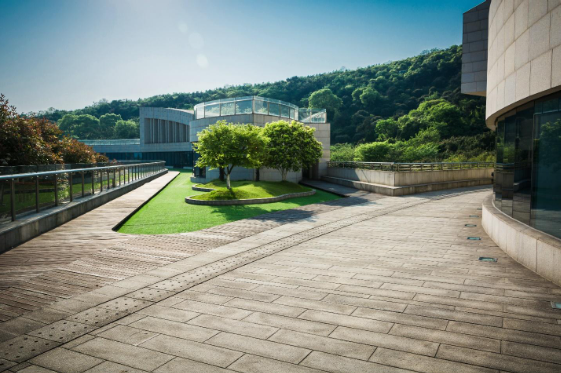


Patio material directly impacts how your outdoor space looks. If it’s right, you’ll end up with a beautiful garden that holds up well over the years. But if it’s wrong, you’ll keep spending money redoing the work that shouldn’t have happened in the first place.
Today, we’ll give you a breakdown of the primary options so you can choose the material that best suits your specific needs. Let’s start.
Why Concrete Patios Remain Such a Popular Choice
Concrete patios are a popular choice for all kinds of gardens, and for a good reason. They are durable, low-maintenance, and come in an array of finishes. The popular finishes include stamped concrete, exposed surfaces, polished finishes, and stenciled patterns.
Just a decade ago, people believed that concrete was only available in plain grey surface. But this notion doesn’t hold anymore. Concrete is now available in a range of styles and at a considerably lower rate than natural stone.
The practical case of concrete is also strong. It handles heavy use well and also requires little to no maintenance to stay in good shape.
How Natural Stone Is Compared to Concrete
Natural stone is a premium patio material. It has genuine advantages, which is why it’s costly.
The look of this stone has a depth and character that no other material can fully replicate. Its common types are sandstone, limestone, slate, and granite. Each piece feels unique, and its aesthetics give it a premium feel. Natural stone also handles temperature changes well, which means it can help keep the outdoor area cooler in the summer.
The obvious trade-off is cost: it is way more expensive than patio concrete. Similarly, its maintenance requirements are more demanding, as it needs to be sealed regularly to prevent staining.
Where Porcelain Fits Into the Conversation
Porcelain is also a popular choice. It is durable and available in a range of styles. It doesn’t require regular maintenance and can maintain its appearance for several months without the sealing requirements of natural stone.
So, where does it lack? Well, its installation is complex, and the cost is high. It requires a stable and precisely prepared base to sit correctly. Similarly, extraordinary cutting skills are required to get neat finishes around edges. The installation cost is also higher than that of concrete.
It’s a fair choice for homeowners who want a premium feel but don’t have the budget for natural stone.
The Case for Brick and Composite Decking
Brick paving suits certain garden styles well (where traditional character is required). It is also durable and ages gracefully. The replacement is easy, and you can change the damaged brick whenever you want. The aesthetics of bricks work well only in scenarios where the modern material wouldn’t feel right.
Composite decking falls into a completely different category. It is primarily used in raised areas that can benefit from a warmer feel underfoot. Similarly, gardens with a more relaxed and informal style also use it.
The right choice for your garden depends on how you use the space. Keep in mind the aesthetic you’re working toward, your budget, and the amount of ongoing maintenance you can commit to.
Thinking about all of the above things produces results you’ll live comfortably with.